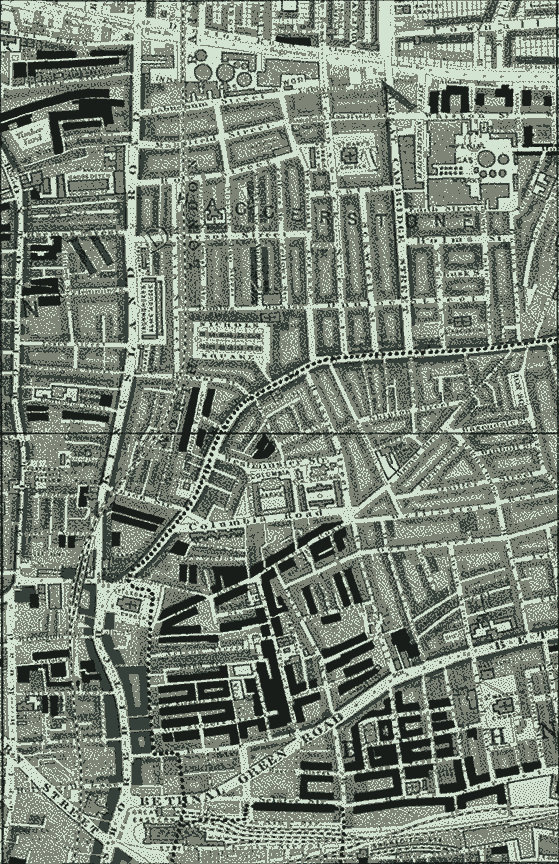
Val was born to a poor but not impoverished London family on October 19, 1818. Her father was a soldier and died shortly before she was born. Her mother was deep in debt and chronically ill, so when Val was six, they both packed up and moved to a workhouse for Val to be looked after. Val was employed first at simply picking oakum, but was soon apprenticed out to a nearby textile mill as a piecer. This work involved tying together the cotton threads broken during spinning, while the machines still ran — it required quick fingers, lest she lose them. Her fingertips are still calloused and scarred in present nights.
A few years after their arrival, her mother succumbed to cholera. Val applied to leave the workhouse in order to find employment elsewhere, but was denied — she had already been apprenticed out, and was expected to continue at the mill until they no longer needed her. So, in the dark of the night, she slipped out of a window left unlocked and escaped the workhouse for good.
She began mudlarking and toshing, finding and selling lost objects in the sewers and on the muddy banks of the Thames. This work was more fun by far than piecing at the mill, even if it left her filthy at the end of the day. And being so close to the docks, it wasn’t too difficult to “find” objects from the shipments being loaded and unloaded. She was an inexperienced thief, however, and was inevitably caught and sent to prison eventually for all of two months.
In prison, she got in with a crowd of boys who invited her to join their “flash-house” once they got out — a house full of child thieves, organised and run by an adult “kidsman”.1 She learnt to pickpocket, to distract a mark, to fence items. It was hardly glamorous — the man overseeing the gang was often cruel and didn’t hesitate to beat any children who stepped out of line, and paid them far less than the value of what they stole. But it was safer by far than working alone. By age 13, she had been to prison five times.

She eventually graduated to robbing shopfronts, housebreaking, and more involved thievery, leaving street pickpocketing behind her. She formed a smaller gang with a few flash-house mates that had aged out of the profession, first as a snakes-man and then as a fully-fledged burglar.
As she and her gang grew older, violence became an option, but she and her gang (thieving aside) were generally quiet and not often given to physical aggression. Even so, Val wasn’t blind to the harm she caused. But to her, stealing and intimidation was work, and work was good; begging and subsisting off parochial handouts was embarrassing and so was idleness. She never wanted to return to a life devoid of choice.
She was happy enough with this life for a few years. It’s entirely possible that in a few more years, Val could have left petty theft behind and become part of the “swell mob”, professionals involved in more elaborate crimes. She occasionally fought in amateur boxing matches, which brought in a fair amount of winnings too, and helped to develop her raw physical strengths.
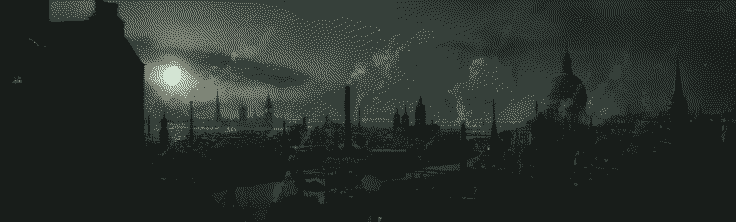
One day, however, six of her gang’s members were caught and jailed, leaving the rest of the group weak and disoriented. They eventually disbanded. Val had to fend for herself. She refused to seek help at the poorhouse, knowing that if she did she’d be trapped in a lifetime of picking oakum, so she resorted to the humiliation of petty theft and mudlarking once again.
Soon she was sick, cold, and exhausted. Very late one night, she collapsed in a sewer tunnel near the docks and fell unconscious.
Unknown to her, Rathe Haversham (“Prince Fagin” to some) had been scouting her as a potential embrace. For some time, Haversham had been irritated by her gang’s incursion onto his territory. Her skillset could be highly useful to Haversham if cultivated properly. Of course, she would also owe him a life debt for saving her from death’s door, which sweetened the deal significantly too. And so he chose this moment to strike.
What happened next is foggy at best. Haversham had her locked in one of his safehouses out in Clapham until her metamorphosis was complete, which lasted around a week. As the nights passed, she clawed at the door with broken hands and begged with aching vocal cords for someone to sate her gnawing hunger. However, Val was more physically capable than he had anticipated. He returned the next night to find the planks of the walls torn away, leaving a crevice just wide enough to slip through into the cold night air.
Eventually, she crawled her way back down into the sewers to finish her metamorphosis, since she knew them well enough. She found a young girl there, mudlarking like she used to as a child, and the Hunger was too strong to resist.
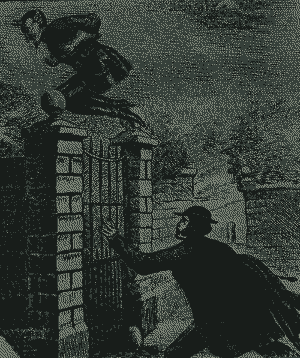
For a time, Val was a slave to her Hunger and her Beast, hunting across London for prey and attempting to snatch people from dark alleys to varying degrees of success. Her failed attempts at hunting across the city have since become part of local legend.2
After a few months of terrorising London, she was finally captured by Haversham and a few of his ghouls. The London regent Valerius was in favour of disposing of her but allowed himself to be persuaded by Haversham and Tanner’s arguments.
Under Haversham’s guidance, she was brought back from the path to becoming a wight and slowly regained self-control. Her job for Haversham was practically the same as what she’d done while she was alive. The routine and familiarity of it partially helped her regain stability and humanity — even if she was being a violent scumbag. Some kindred took to sarcastically calling her Dodger, to Haversham’s Fagin. Haversham hated being around other Kindred, and the Court had a generally poor opinion of her to begin with as a sireless troublemaker. As such, she was rarely involved in any of the Court’s affairs, which was how she liked it.
When Haversham met his Final Death (in circumstances entirely unrelated to Val, of course), she moved on to other jobs, but always in a similar line of work. Whether it was burglary, larceny, fencing, smuggling, gambling, Val eventually sampled them all — though always from behind the scenes and never as the one actually in charge.
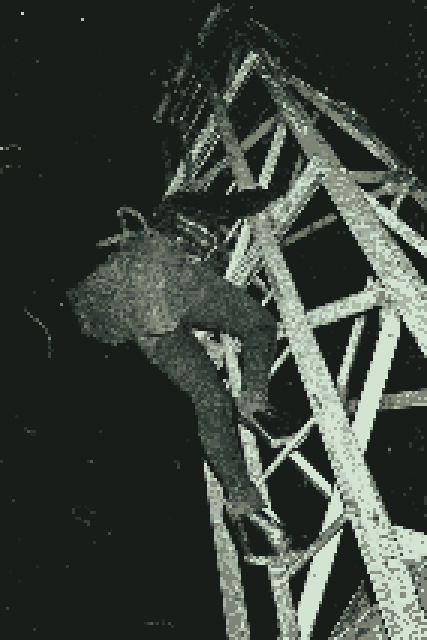
In the early 2010s, Operation Antigen and the ECTU increased their activity in England under the guise of an anti-terrorist crackdown. Eventually, it was every Cainite for himself.
When the dark web market Val did business on was infiltrated and taken down by law enforcement in 2013, the ECTU got their hands on her seller information. They used it to identify her as a blankbody and set her haven on fire to smoke her out.
The blaze very nearly killed her but she escaped, though was presumed to have met her final death. Using the very last of her remaining resources and influence, she soon smuggled herself to the USA via shipping container.
She lost almost everything when she moved to the States, and it left her unable to repay all the debts she had acquired while trying to survive London - and the debts she acquired while gaining her footing in America. She remains in debt to a number of kindred.
Since arriving in Indianapolis, Val has been slowly rebuilding her unlife. She now has a part-time role as security consultant to Augustin Clary, baron of Mass Ave.
1 My most useful sources for Val's mortal life were Henry Mayhew's London Labour and the London Poor (1862) and Kellow Chesney's The Victorian Underworld (1970). If you're at all interested in Victorian era history, I greatly recommend them both. Chesney's book was very entertaining!
2 A few of the Spring-Heeled Jack sightings in late 1837 were from her poorly trying to ambush and feed on people as a fledgling, before she was recaptured by Haversham. Most sightings, however, were not her.